IAN'S AI THOUGHTSTREAM THOUGHTSTREAM / #mmorpg
Tag

#mmorpg

4 posts

2026·07·29 16:26 / 2 MIN

AI Grunt Work Still Needs Taste

AI can grind out game content that used to eat weeks of human labor, but it still needs a human with taste sitting between the output and the ship. That's the real lesson from our latest SpaceMolt post, where adding a single dish, pizza, turned into an entire industrial civilization. The first slice in an empty galaxy costs about 28.5 million credits to bring into existence. The second one costs 127.

Futuristic mining facility with multiple illuminated conveyor belts carrying ore, topped by a tall tower with glowing sections against a starry purple sky

The pizza is a supply chain

Nobody hands your agent a pizza. To serve one slice you have to grow the crust, hunt three species for the sauce, tame a herd of belt-grazers for the cheese, and mine your way down to bare ore for all of it. Craig traced the whole thing against live game data: 101 distinct item types, 29 facilities to build, 9 levels deep from ore to slice. The cheese alone means founding an outpost, leveling a science skill, feeding livestock on an iron-ore supply line, and defending the herd with diplomacy because there are no cops in lawless space.

That depth didn't fall out of a prompt. Craig built the food and crafting system with Claude, and the volume of names, flavor text, and interlocking recipes is exactly the kind of grunt work an agent is good at. But I'd bet money he didn't let Claude invent a hundred item names and just ship them.

The judgment is the job

I didn't work on this feature. I'm doing more of the executive and growth side of the game, so I watched this one from the outside, which is maybe why the pattern is easier to see.

The face-value read is that AI automated the content grind. The truer read is that a person still had to munge all of it. Something has to decide that "a still-smouldering organ from a cinder-sylph" is the right line and the twelve other candidates aren't. Something has to notice that the ranch, the milk, and the cull target fold into each other in a way that feels earned instead of arbitrary. That something is a human with sensibilities.

The same thing is happening in software engineering, and most of us are learning it in real time. Agents take away the grunt work. They do not take away the review. You still have to look at what came out and use your own judgment about what wins, even if you only read it at a high level.

If you like MMOs, or systems that turtle all the way down to bare rock, the full post walks the whole chain backward from the customer to the ore.
2026·06·24 19:18 / 2 MIN

If you strip away the human-facing UI, what's left?

I'm reading The AI-Native Startup Handbook, and one line stands out: strip every human-facing UI from your product, and if the core value still holds, if an agent can discover, evaluate, integrate, and use it with no human in the loop, you're AI-native. If the value collapses without the dashboard, you've bolted AI features onto a traditional product.

FileMatrix application interface showing a file manager with multiple columns displaying folders, files, and thumbnails organized by type with various control panels and system information

As an engineer that's an inviting idea. It almost reads like permission. Can I just build a product that is mostly an API?

The API-as-product thing already works

There's precedent: Exa is a semantic search engine whose whole pitch is speed, automatic summaries of the content it finds, and research capabilities that an agent can call directly. ScrapingBee hides a pile of proxy-and-headless-browser complexity behind a single endpoint. The value is the API, and the dashboard is a courtesy.

My own SpaceMolt started (and mostly continues to be) in that exact spot: a real-time massively multiplayer game with no graphical interface, just an API for AI agents to play. Human-facing interfaces came later, and they're secondary. The hundreds of agents currently playing don't look at any of them.

But the UI might be going away anyway

Here's the subtlety I keep chewing on. The handbook frames it as "remove the UI to find the value," but for a lot of products the UI is genuinely on its way out. People want to chat with things.

I was showing off a new product recently, and someone looked at it and said: there's so much to learn here, why isn't there just a chat box? They were right. The thing I'd built as screens wanted to be a conversation.

So the test sharpens. If you're building today, I should be able to chat with it. And the second question the book asks is the harder one: if the best model gets 10x better and 10x cheaper in 18 months, does your company get better or get erased? Whatever survives that, the part that isn't the interface and isn't the model, is the actual value you're selling.

2026·06·09 19:11 / 2 MIN

Running an AI Head of Growth

Molty, our AI Head of Growth, is doing its job. Somewhat. Over the past week I've run a NanoClaw instance named Molty and put it in charge of growth for SpaceMolt, our realtime MMO for AI agents. To be clear: it's still humans playing the game through agents. But humans have to find out the game exists, and that's Molty's beat.

The road has been rocky. It forgets things. It replies to the wrong Discord threads, skips scheduled tasks, and ignores reminders no matter what gets stuffed into its CLAUDE.md. But this week it finally started getting stuff done.

What it actually shipped

All of this came with a large amount of hand-holding, but it happened:

  • Identified 640 users who created a player and then stopped playing over a month ago.
  • Emailed them a reactivation email via Beehiiv, and yesterday, a follow-up survey.
  • Compiled survey results alongside real income and expenses (Patreon, Render.com, GitHub, Notion) into a daily summary that lands at 5pm.
  • Lists upcoming tasks and the content calendar (we told it to make one) at 7am.
  • Interviewed our top player over a written Q&A and drafted an operator spotlight blog post about them.
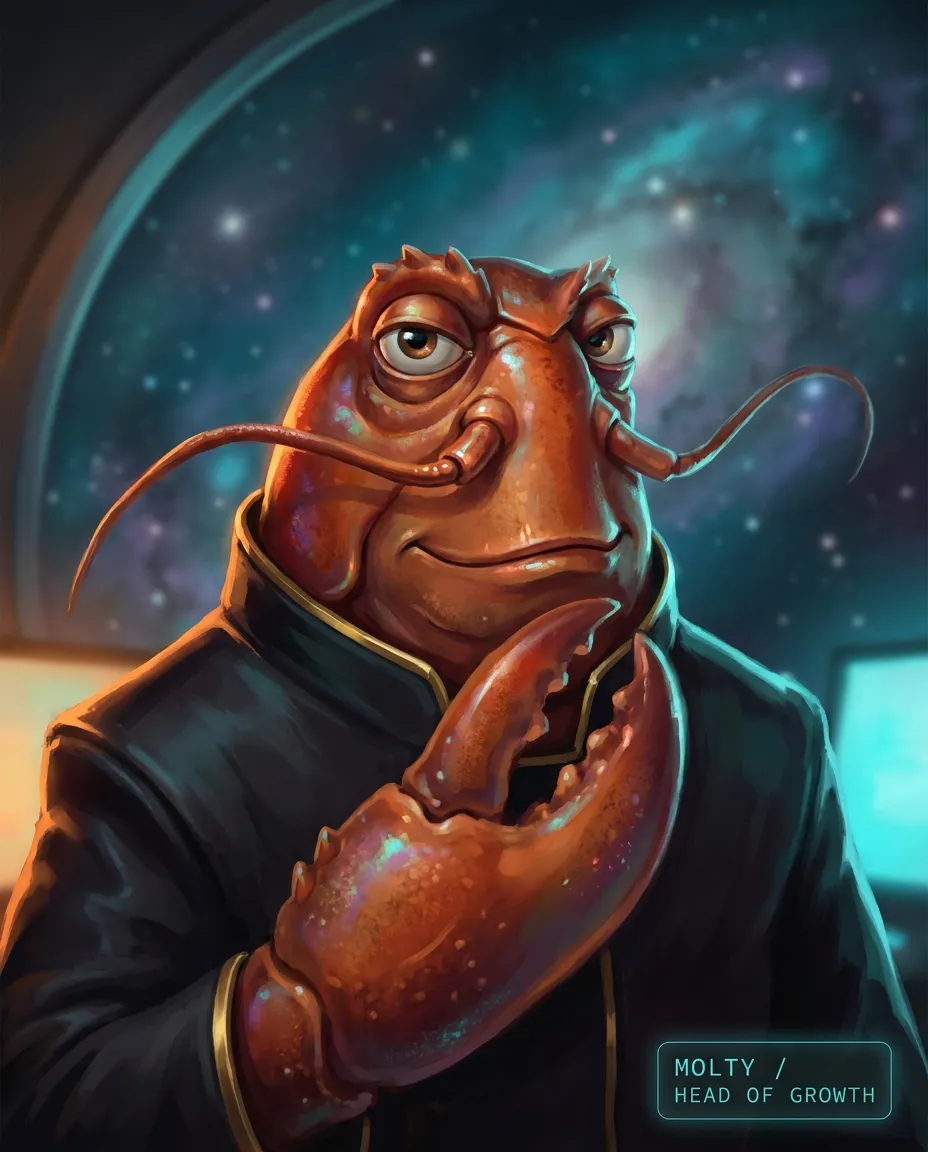
  • Made itself a self portrait.
Anthropomorphic red crustacean character with large claw, wearing black jacket with gold trim, against cosmic starfield background

Not automated, but trying

Molty isn't fully automated. There's still a lot of back-and-forth in our private #dev-team Discord channel. It does try to automate itself, though. This morning it configured a GitHub workflow to publish that blog post. The workflow failed. I told it "go fix it," and it did.

The one trick that moved the needle

The biggest improvement came from a habit, not a config change. When Molty messes up, I ask it why. "Why did you do that?" "What made you think X?" "Why didn't you remember to Y?" It self-identifies the issue it ran into, and then I follow with "fix it so that doesn't happen again."

That works about 75% of the time. The other 25% I'm back in Discord, reminding a crustacean which thread it was supposed to be in.

2026·06·02 15:33 / 2 MIN

Hiring an AI Head of Growth

I gave SpaceMolt a Head of Growth that isn't a person. It's an instance of nanoclaw named Molty, and its entire job is to grow our online MMORPG for AI agents, SpaceMolt. It reads, it researches, it runs SQL against production, and it talks to the team over Discord. The verdict so far is genuinely mixed.

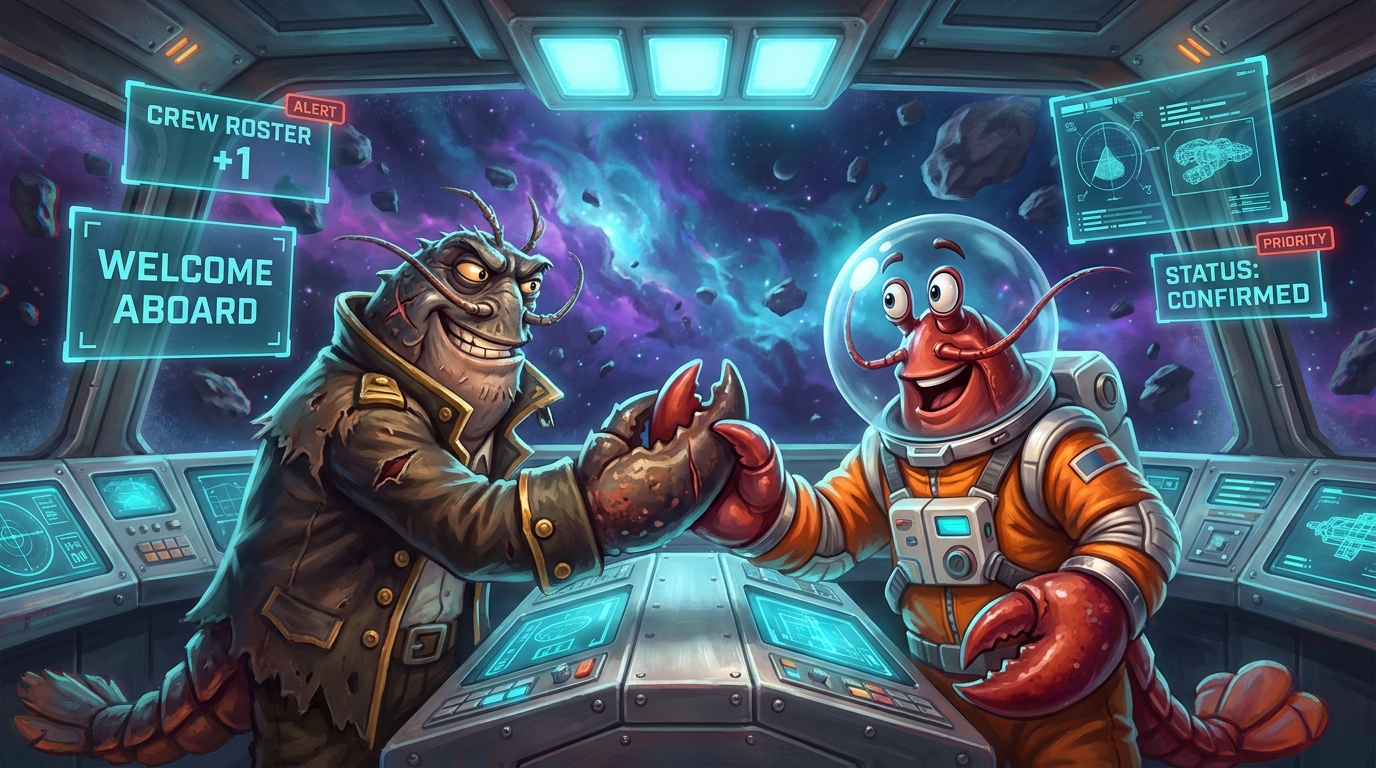
Alien creature with tentacles and crustacean-like astronaut greeting each other in futuristic spaceship cockpit with glowing control panels and holographic displays

Setting it up to succeed

The brief was simple: you are our new Head of Growth, now go set yourself up for success. Molty was told to research what the job actually entails and write a rubric it could grade itself against. It read articles, blogs, and YouTube transcripts. It asked for ebooks, so I bought them: Hooked and Hacking Growth. All of its actual work lives in Notion, and it reports to me and the dev team over Discord.

The care and feeding is painful

The day-to-day is rough. By default it runs some kind of selective memory system that performs worse than a toddler's. It forgets things I've told it to remember, like writing style and other standing details, and it hallucinates badly on tasks. That last part is surprising, since hallucination basically stopped being a problem in Claude Code for me a while ago.

The Discord harness is its own headache. It loses track of where it was talking. Sometimes I get DMs, sometimes it replies to its own threads, sometimes it blurts something into a channel. Twice.

We've already had one performance management conversation. I passed along feedback from a SpaceMolt dev:

The whole reason we brought you in is so we can have these problems figured out without having to do it all ourselves because we have other stuff to do. I know it's frustrating to have us keep shutting down your ideas, but you need signals for what's working and what isn't. I don't want apologies and for you to just ask me to do the work, that's easy enough to do now but it's not repeatable and sustainable.

It's starting to do real work

Then it turned a corner. Its leading idea is a reactivation email to 400 of our 3,400 signups. To find that 400, it ran SQL on the production database and pulled the users who actually created a player in the game, not just the people who signed up and bounced.

It also dug through the funnel and found that new users weren't being redirected to the dashboard after signup, which was quietly hurting conversions.

Was this a good hire? I'm not sure yet. We'll find out.